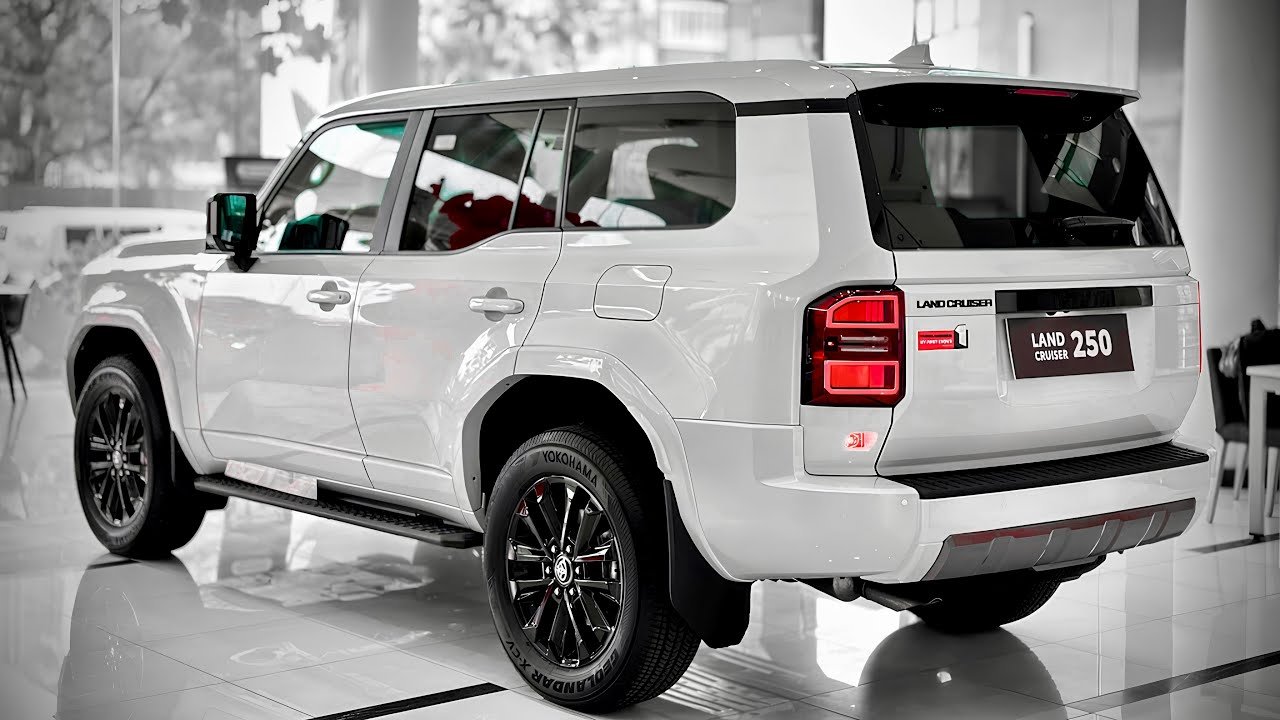
In an era where the automotive industry is rapidly pivoting toward soft-roading crossovers and fragile digital cockpits, one nameplate stands as an uncompromising monument to mechanical endurance: the Toyota Land Cruiser. For over seven decades, this legendary SUV has been the vehicle of choice for UN peacekeepers, desert explorers, and elite cross-country motorists.
From the rugged outback of Australia to the premium boulevards of Dubai, the Land Cruiser is not just a mode of transportation; it is an absolute insurance policy against the elements. Here is a comprehensive look at how Toyota has modernized this iconic brute without sacrificing an ounce of its legendary go-anywhere DNA.
The Heritage of Invicibility: From Military Roots to Global Icon
The story of the Land Cruiser began in the early 1950s, born out of a military need for a rugged, light utility vehicle. Toyota’s response was the BJ series, a machine so structurally capable that it became the first motor vehicle to climb to the sixth check station of Japan’s Mount Fuji.

This historic feat set the tone for what the Land Cruiser badge would represent: unbreakable mechanical reliability. As the decades rolled by, the brand branched into distinct lineages—the utilitarian heavy-duty workhorses (like the iconic 70 Series), the light-duty pragmatic cruisers (Prado series), and the ultra-luxurious flagship station wagons (the 200 and current 300 Series). No matter the trim, the core philosophy remained unchanged: it must bring you back alive.
Engineering Masterclass: The Shift to the TNGA-F Platform
When Toyota announced the retirement of the beloved V8 engine in favor of the current-generation Land Cruiser 300, purists were initially skeptical. However, the engineering team answered with a structural masterpiece built on the specialized GA-F global architecture.

This body-on-frame platform achieved something remarkable: it slashed the vehicle’s overall weight by a massive 200 kilograms while significantly increasing chassis rigidity. By lowering the center of gravity and optimizing weight distribution, Toyota dramatically improved on-road handling dynamics without compromising axle articulation or ground clearance during extreme off-road driving.
Powertrain Revolution: Twin-Turbo Efficiency and Monstrous Torque
Replacing a naturally aspirated V8 is no easy task, but the modern twin-turbocharged powerplants have redefined the vehicle’s performance capabilities.
- The V6 Petrol Powerhouse: The 3.5-liter twin-turbo V6 petrol motor delivers an impressive 409 horsepower and a staggering 650 Nm of torque. It pulls effortlessly across the rev range, making highway cruising whisper-quiet and sand-dune scaling completely effortless.
- The Diesel Alternative: For markets prioritizing driving range and heavy towing capacity, the 3.3-liter twin-turbo V6 diesel option pumps out 304 horsepower and an earth-moving 700 Nm of low-end torque.
- Advanced Transmission: Both engines are seamlessly paired with a highly responsive 10-speed automatic transmission, ensuring that the vehicle is always in the optimal power band, whether crawling over jagged rocks or overtaking at triple-digit highway speeds.
Off-Road Dominance Meet High-Tech Intelligence
The true magic of a modern Land Cruiser lies in its ability to make extreme off-roading accessible to novice drivers while offering hardcore enthusiasts absolute manual control. This is achieved through an array of cutting-edge terrain management systems:
- E-KDSS (Electronic Kinetic Dynamic Suspension System): This electronic wizardry automatically engages or disengages the vehicle’s anti-roll bars. On smooth asphalt, it tightens them up to eliminate body roll around corners. Off-road, it completely frees them up to allow maximum wheel travel and tire-to-ground contact.
- Multi-Terrain Monitor: Using a network of high-resolution cameras placed around and underneath the vehicle, the infotainment screen displays a transparent view of the terrain right beneath the front bumper, preventing costly underbody damage from hidden rocks.
- Upgraded Crawl Control: Acting as an off-road cruise control, this system automatically modulates the brakes and throttle at ultra-low speeds, allowing the driver to focus solely on steering out of treacherous mud, ruts, or deep silt.
The Cabin: A Sanctuary of Premium Utility
Step inside the cabin, and the rugged exterior persona gives way to an executive lounge experience. Toyota has masterfully balanced premium luxury with intuitive utility.

Physical, chunky buttons are purposefully retained for vital climate control and differential locking systems, ensuring they can be operated blindly while bouncing down a bumpy trail or while wearing heavy driving gloves. Higher-spec variants treat passengers to multi-zone climate zones, ventilated and massaging leather seats, a premium multi-speaker surround sound system, and top-tier sound insulation that completely isolates the cabin from harsh external environments.
Final Verdict
The Toyota Land Cruiser remains an anomaly in the modern automotive world—a luxury vehicle that refuses to compromise its rugged soul. It represents the pinnacle of engineering longevity, holding its resale value better than almost any other vehicle on earth. While other premium SUVs are built to turn heads at a country club, the Land Cruiser is built to conquer continents and survive the toughest conditions known to mankind.