The global automotive landscape has shifted dramatically over the past decade. Compact SUVs and crossovers have rapidly evolved from trendy alternatives into the absolute default choice for the modern commuter. Navigating this hyper-competitive market has required global automakers to stay incredibly agile, adaptive, and willing to challenge traditional manufacturing philosophies.
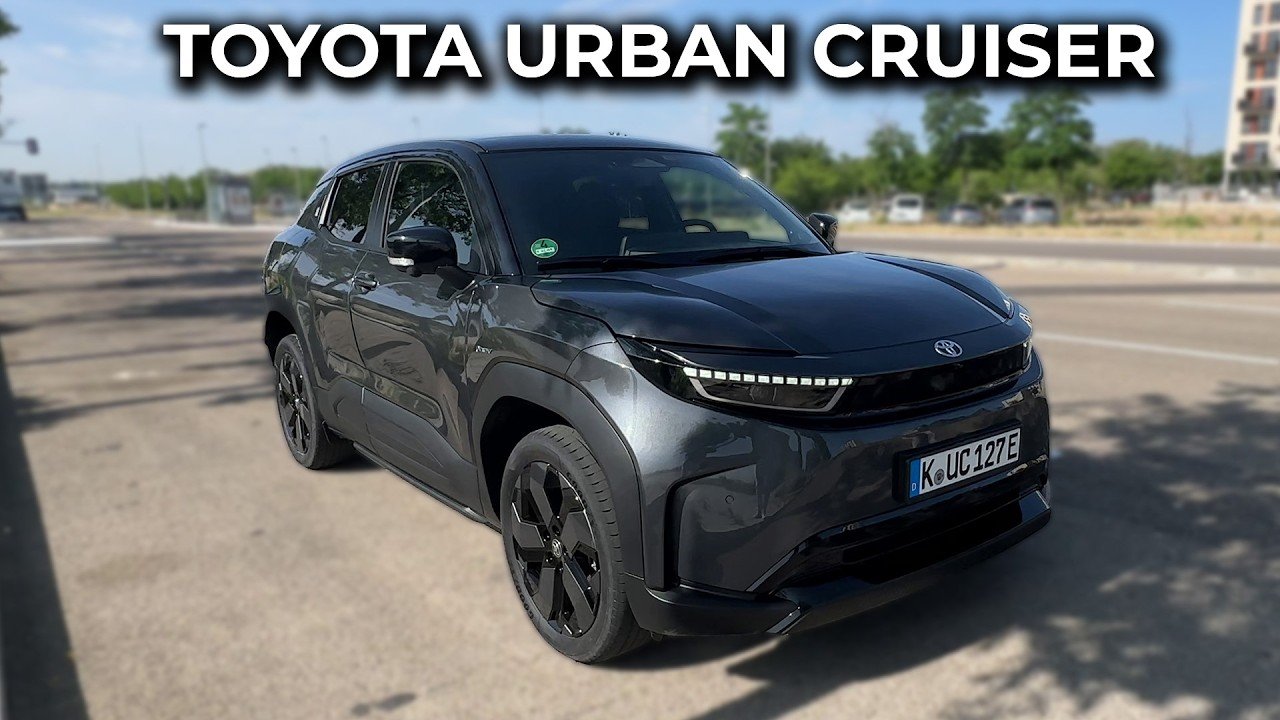
A perfect case study of this modern agility is the journey of the Toyota Urban Cruiser. What began as a clever, tactical partnership has matured into a sophisticated family of vehicles that showcases Toyota’s forward-thinking approach to everyday mobility. By combining legendary mechanical reliability with cutting-edge efficiency and sleek, modern styling, the Urban Cruiser moniker has carved out an unshakeable legacy of its own.
1. The Collaborative Origin: Establishing a Strategic Foundation
To fully appreciate the strength of the brand today, one must look back at its inception. The original Urban Cruiser was introduced as a direct product of a global strategic alliance between Toyota and Suzuki. Launched to give Toyota an immediate, robust foothold in the highly contested sub-4-meter SUV space, it was structurally built on a widely popular shared platform.

However, Toyota didn’t just swap out a front emblem. The engineering team completely redesigned the front fascia to mirror the imposing, rugged aesthetic of their larger flagship SUVs, like the Fortuner. Paired with a highly competitive warranty package and Toyota’s famously seamless service experience, it served as a reliable, no-nonsense entry point that successfully welcomed a completely new generation of buyers into the brand’s ecosystem.
2. The Technological Leap: Embracing the Strong Hybrid Era
As global emissions standards grew stricter and consumer demand for superior real-world fuel economy skyrocketed, Toyota retired the original compact footprint to make way for a groundbreaking successor: the Urban Cruiser Hyryder. This marked a monumental evolution from a basic platform-sharing exercise to a full-scale engineering revolution.

Developed as a spacious mid-size SUV, the Hyryder introduced a game-changing feature to its segment: Strong Hybrid Electric Vehicle (SHEV) technology. By coupling a refined petrol engine with a high-torque electric motor and a self-charging lithium-ion battery pack, the vehicle achieved unprecedented fuel efficiency ratings. For daily commuters navigating chaotic city gridlock, this meant enjoying the presence and comfort of a mid-size SUV with the running costs of a small commuter hatchback.
3. Expanding Boundaries: The Aerodynamic Crossover Silhouette
Building upon the massive brand equity of the Urban Cruiser name, Toyota expanded the family downward to capture buyers looking for something distinct, sporty, and agile. This led to the creation of the Urban Cruiser Taisor.
Steering away from traditional, boxy SUV proportions, the Taisor introduced a sleek, aerodynamic crossover-coupe silhouette. Boasting a striking front grille, sharp LED light signatures, and a sloping roofline, it targeted younger, tech-focused buyers. Under the hood, it brought back driving excitement by offering a punchy turbocharged petrol engine option that delivered rapid acceleration while maintaining commendable real-world efficiency, bridging the gap between premium urban hatchbacks and traditional upright off-roaders.
4. Inside the Cabin: Premium Comfort Meets Intelligent Tech
Across the entire modern Urban Cruiser portfolio, Toyota has paid meticulous attention to elevating the tactile experience inside the cabin. The interior design successfully transitions these vehicles from basic utility machines to premium sanctuaries.

- Connected Ecosystem: Higher variants are equipped with large, crisp touchscreen infotainment units featuring seamless wireless smartphone integration, voice commands, and advanced connected-car telematics.
- Upscale Comforts: Features that were once reserved exclusively for luxury segments—such as ventilated front seats to battle harsh summers, a massive panoramic sunroof, a heads-up display (HUD), and a 360-degree parking camera system—are now standard highlights.
- Safety Infrastructure: Built on highly rigid structural platforms, the lineup is secured by a robust safety net including up to six airbags, Electronic Stability Control (ESC), Hill-Hold Assist, and sophisticated disc-braking systems across all four wheels.
5. Looking Forward: The Roadmap to Pure Electrification
The evolution of the Urban Cruiser brand is far from over. As global infrastructure pivots toward zero-emission transport, Toyota is leveraging this household nameplate to spearhead its upcoming wave of accessible electric vehicles.
Future iterations under this banner are being engineered on dedicated, highly flexible skateboard EV architectures. By eliminating the constraints of traditional engine bays, these upcoming models are projected to offer massive cabin space alongside advanced battery packs capable of driving ranges exceeding 450 to 500 kilometers on a single charge. This ensures that the Urban Cruiser brand remains fully equipped to power the clean energy transitions of tomorrow.

Final Verdict
The Toyota Urban Cruiser is no longer just a single vehicle; it is a masterclass in strategic brand expansion. From its humble beginnings as a shared platform, it has blossomed into a sophisticated portfolio comprising high-performance turbo crossovers, hyper-efficient strong hybrids, and an imminent electric future. By combining smart manufacturing partnerships with its legendary promise of bulletproof reliability, Toyota has ensured that the Urban Cruiser remains a favorite for modern city streets.